
BC First Nations Climate Resilience Course
Welcome to the BC First Nations Climate Resilience Course!
The BC First Nations Climate Resilience Course supports First Nations individuals, communities, and Nations in British Columbia to practice self-determined climate action with a focus on climate adaptation.
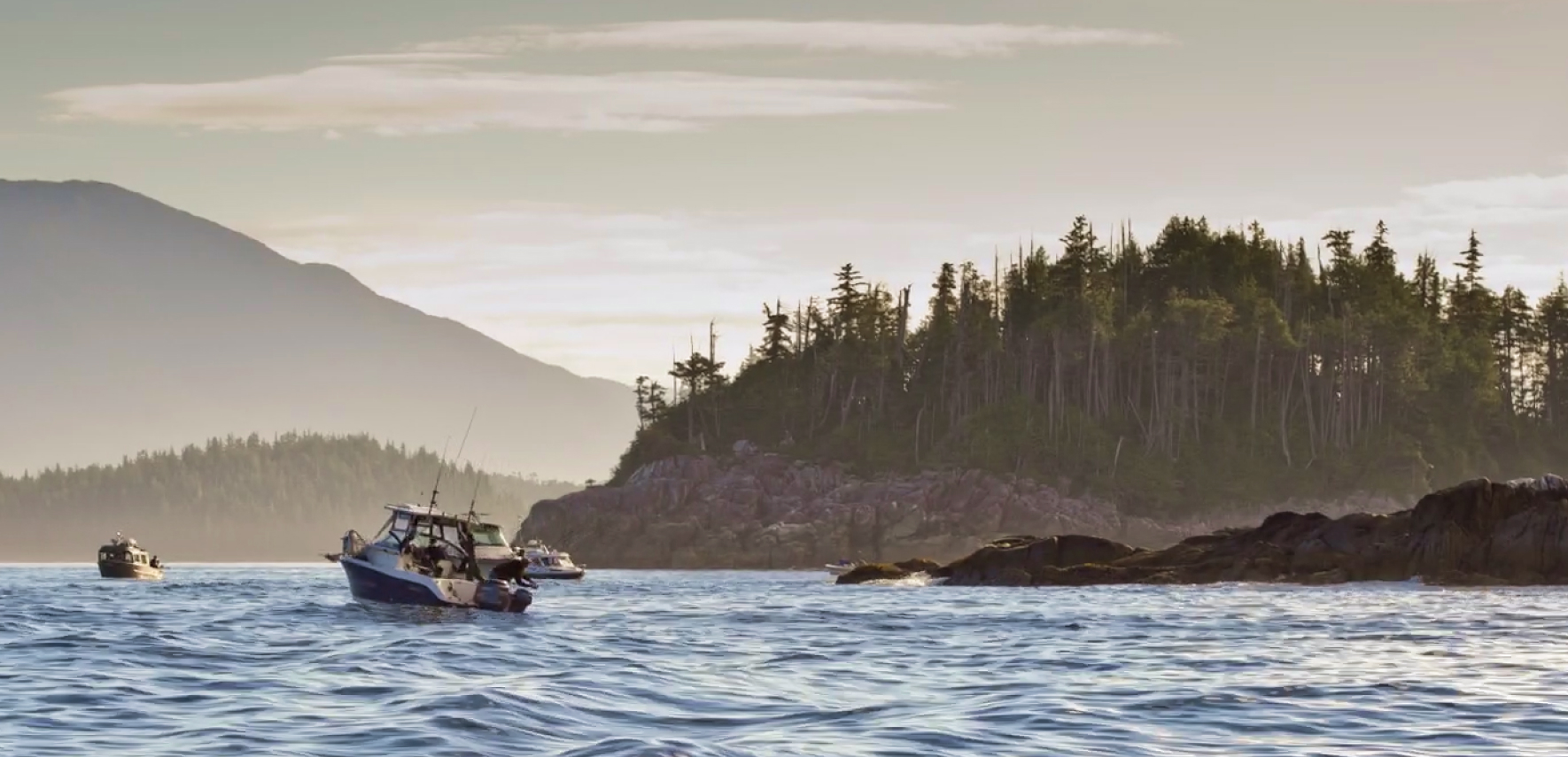
Welcome FROM CFN
Watch The VideoChristine Smith-Martin, CEO of Coastal First Nations-Great Bear Initiative, and Trent Moraes, Board Member of Coastal First Nations-Great Bear Initiative and Deputy Chief of Skidegate Band Council, introduce the BC First Nations Climate Resilience Course.
Video TranscriptLearning about climate change can feel overwhelming—especially when the impacts are already being seen and felt in our Land, Water, Air, and communities. It is important to remember that climate adaptation does not happen all at once.
Meaningful change often begins with small, practical steps taken over time.
This course supports learners in moving from understanding to action in climate adaptation, grounded in First Nations values and worldviews. Throughout the course, Elder Shane Pointe (Musqueam Indian Band), Janna Wale (Gitxsan and Cree-Métis), Melissa Cahoose (Ulkatcho First Nation), and Brett Huson (Gitxsan) share stories, teachings, and guidance that demonstrate how lasting change is built through small steps, strong relationships, and cultural practices.
Meet the
Course Hosts
Welcome and introduction from our hosts: Elder Shane Pointe, Janna Wale, Melissa Cahoose, and Brett Huson.
Video TranscriptWatch the VideoCommemorating Shane Pointe
Since the completion of this course, we lost a beloved pillar of the community and one of the hosts of the BC First Nations Climate Resilience Course.
Elder Shane Pointe, Hopokeltun, was a Knowledge Keeper who belonged to the Musqueam Nation. A teacher, artist, community member, mentor, and Knowledge Holder, he was known as “Uncle Shane” to many. This course would not be the same without him: the songs, insights, wisdom and words of encouragement he shares throughout this course stand as a testament to First Nations’ resilience. Shane’s warmth, generosity and kindness are imbued in all the teachings he has left behind. He will not be forgotten.
In his words,
“nə́c̓aʔmat – we are one.”
Course Outline
This course is modular, designed to allow you to learn about the topics that are most relevant to you and your community right now. Just as every community’s climate adaptation journey is different, there is no single ‘right way’ to use this course.
The course begins with an Introduction followed by four modules: (1) Worldviews in Climate Adaptation, (2) Data & Governance in Climate Work, (3) Climate Adaptation Actions & Planning, and (4) Implementing, Monitoring, Evaluating, & Improving Climate Work.
While this course offers a linear pathway to learning, you can also move between the modules based on your interests and needs. You can jump between them, explore only the sections that are most relevant to you, and revisit the material or modules as your knowledge and experience grow. You can also start with the Beginners’ Pathway outlined below and return to the more advanced topics when you are ready.
Modules
Introduction
Course Introduction
Grounds learners in culturally safe approaches to climate work.
Introduction
Module 1
Worldviews in Climate Adaptation
Introduces climate change from both BC First Nations’ and Western perspectives, highlighting First Nations’ climate resilience practices.
Module 1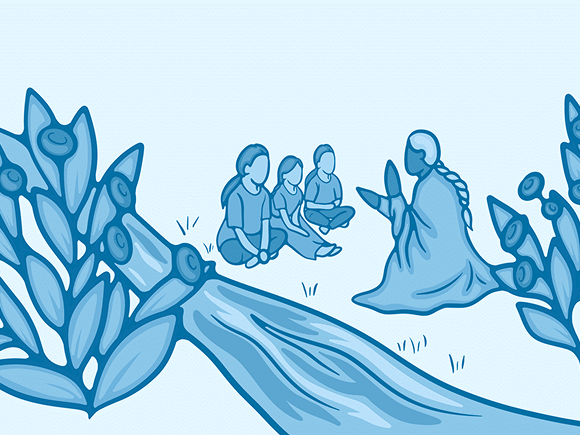
Module 2
Data & Governance in Climate Work
Explores the role of data (information) in climate action, emphasizing the value of both BC First Nations and Western knowledge systems. Outlines key concepts like hazard, risk, impact and vulnerability, and offers guidance and resources to fund and partner on initiatives.
Module 2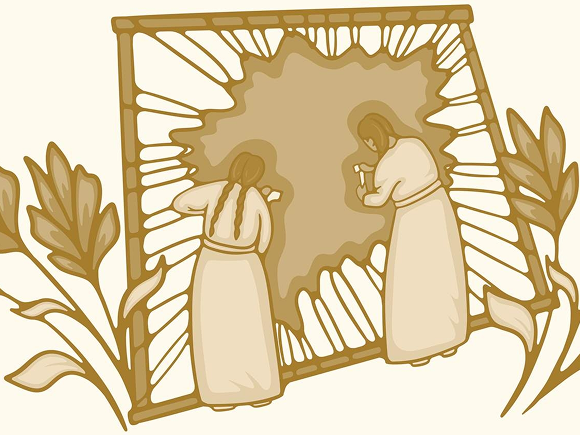
Module 3
Climate Adaptation Actions & Planning
Provides suggestions for practical, quick-start, and low-barrier climate actions, and outlines possible steps for conducting a climate risk assessment and drafting climate adaptation plans.
Module 3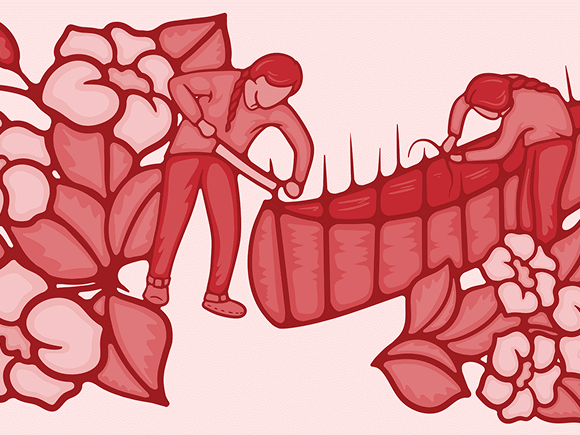
Module 4
Implementing, Monitoring, Evaluating & Improving Climate Work
Explores the different ways to implement, monitor and evaluate success.
Module 4Beginners’ Pathway
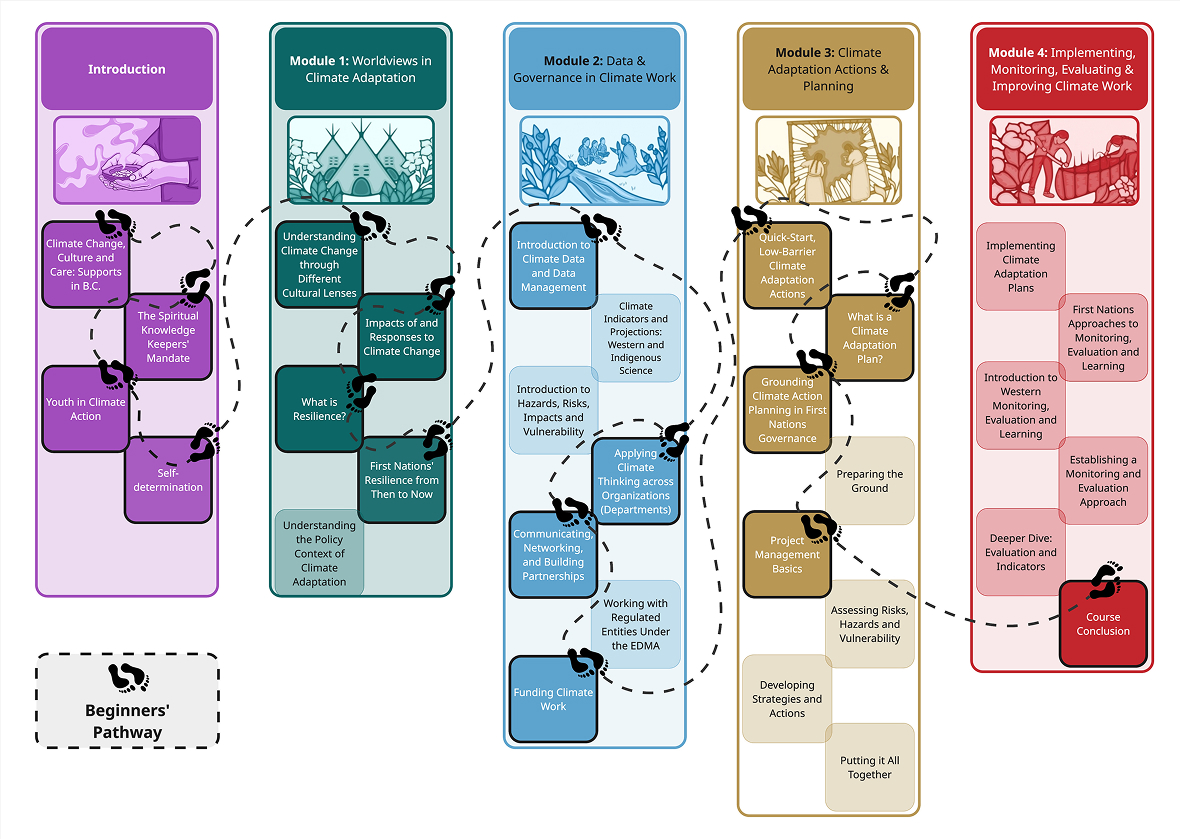
The Beginners’ Pathway follows the same modules as the BC First Nations Climate Resilience Course but skips some of the more advanced topics. It provides an accessible learning journey designed for Youth and others who are new to climate adaptation work.
The image below shows the course map, with the topics included in the Beginners’ Pathway shaded darker. Click the button below to access the Beginners’ Pathway course.
Acknowledgements
Coastal First Nations-Great Bear Initiative recognizes that our work is strengthened through partnerships and collaboration. We extend our sincere gratitude to those who contributed their leadership, knowledge, guidance and ongoing support to the development of this course.
We are grateful to the members of the Steering Committee which includes representatives from the First Nations Leadership Council (FNLC) and the Indigenous Climate Adaptation Working Group (ICAWG) for helping guide the course throughout its development. We also extend our deep appreciation to our course hosts, Elder Shane Pointe, Janna Wale, Brett Huson, and Melissa Cahoose, for sharing their knowledge, stories, and teachings.
We would also like to thank the ICAN Climate Action Coordinators and FNESS Regional Climate Resilience Coordinators who helped ground the material in community perspectives. Thank you to the Pacific Climate Impacts Consortium, Fraser Basin Council, and other First Nations climate leaders from across British Columbia who provided critical guidance, knowledge and review.
The course comes alive through the creative work of Ktunaxa artist, Darcy Roshau, and Métis-Cree videographer, Kamala Jasmine Todd. Rooted in her Ktunaxa heritage, Roshau’s work is inspired by the natural world—often featuring plants, animals, and people—with a particular focus on floral subjects native to Ktunaxa territory. Todd is a planner, filmmaker, and cultural curator working towards decolonizing the city, especially through story and place-based practice, and upholding Indigenous rights.
Course Development tEam
Gillian Aubie Vines
Project Lead
Denni Clement
Course Advisor
Kylie Clark
Course Coordinator
Gala Muñoz-Carrier
Content Development
Jake Rogger
Content Development
Ayla De Grandpré
Research
Kamala Todd, Indigenous City Media
Video Lead
Contributors to this course include individuals from or representing the following Nations:
- Fort Nelson First Nation
- Gitga’at First Nation
- Gitxaała Nation
- Gitxsan Nation
- Haida Nation, Skidegate
- Hupačasath First Nation
- Kitasoo Xai’xais First Nation
- Kanaka Bar Indian Band
- Ktunaxa Nation
- Lhoosk’uz Dene Nation
- Metlakatla First Nation
- Musqueam Indian Band
- Neskonlith Indian Band
- Secwépemc Nation
- Stó:lō Nation
- syilx Okanagan Nation
- Uchucklesaht Tribe
- Ulkatcho First Nation
Want to Reach Us?
Please complete the contact form and we will get back to you as soon as we can!
Contact Us