Learning together to revitalize Pacific herring

The late Kitasoo Xai'xais Hereditary Chief Haay-maas Ernest V. (Charlie) Mason shared his extensive knowledge on revitalizing Pacific herring and helped bridge cultures. Image: Moonfish Media.

Charlie Mason

Written by Alejandro Frid

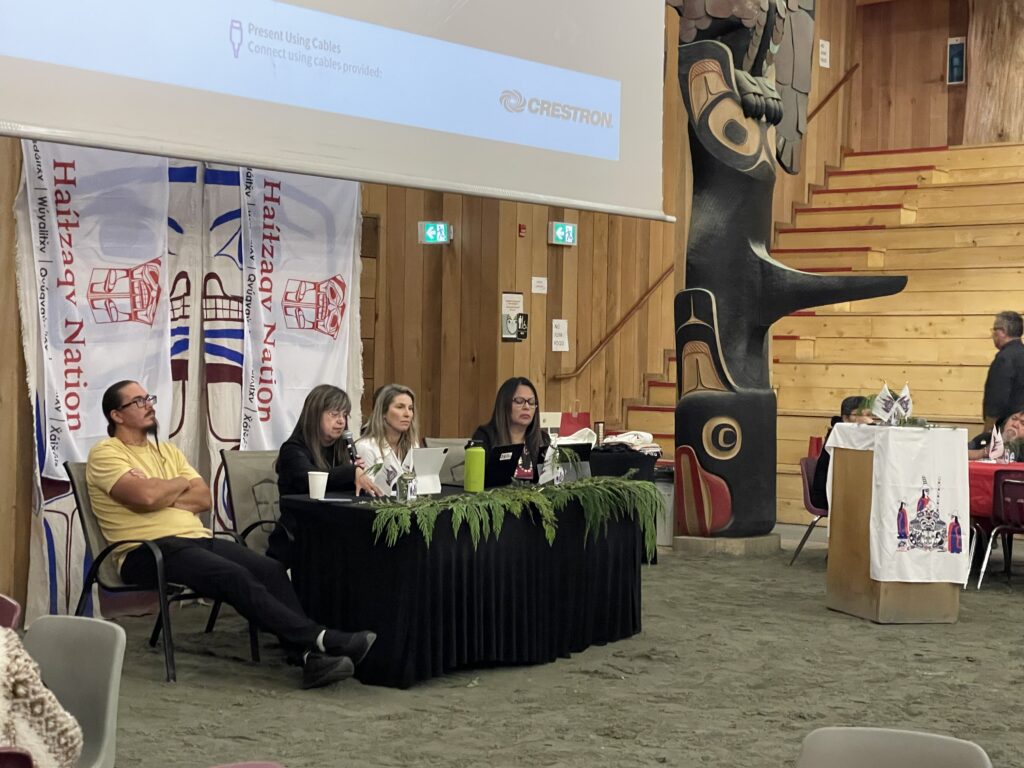
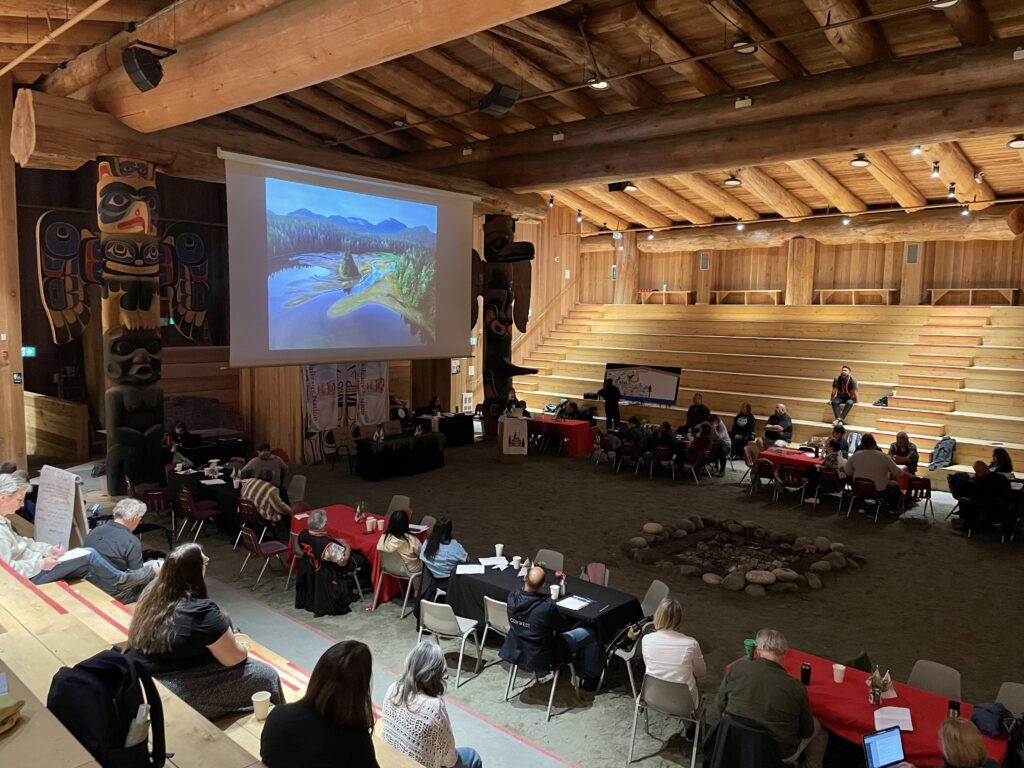
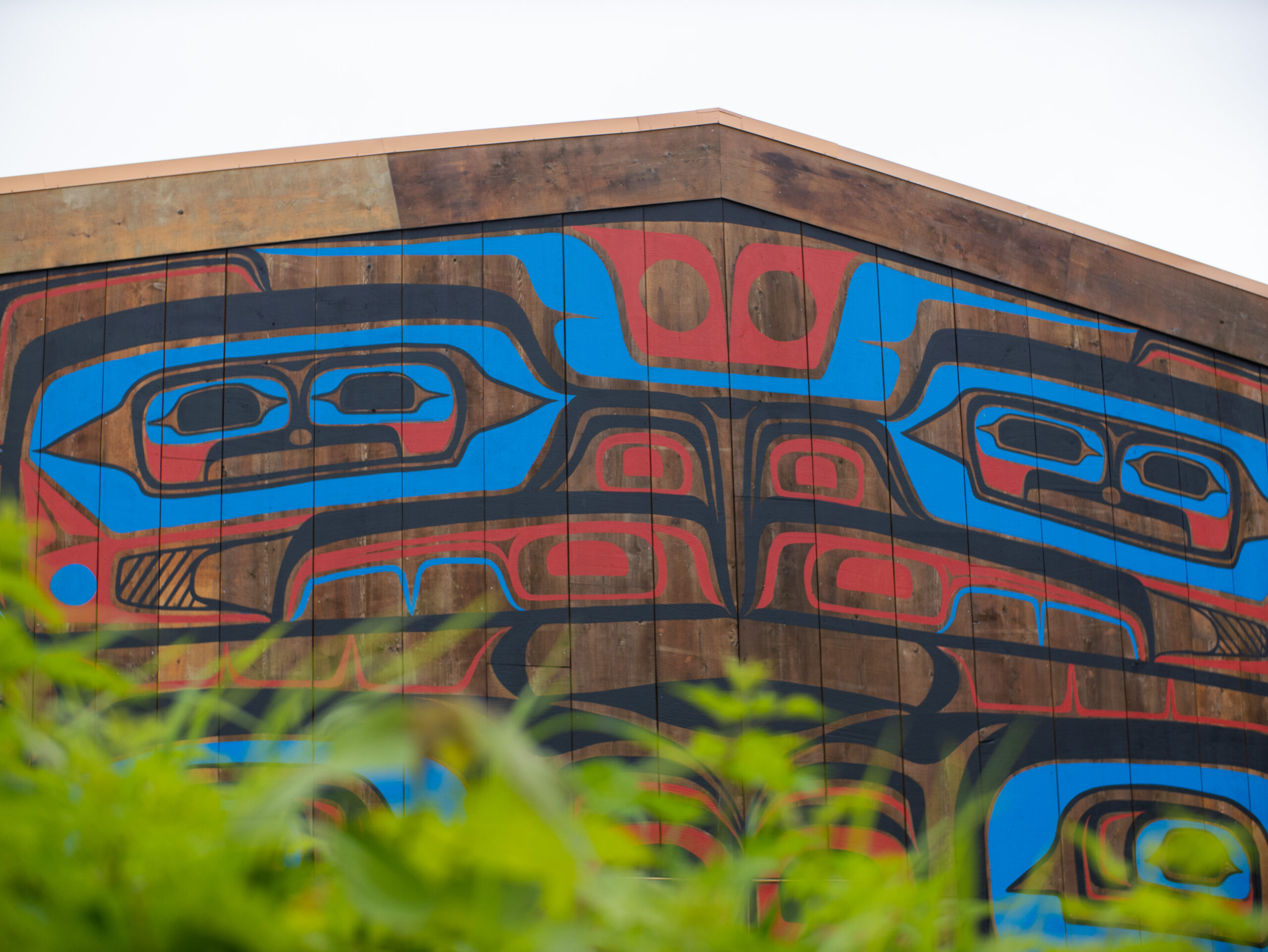
It was a cold and dark afternoon in November 2023. The rain poured loudly on the roof. Thankfully, we were dry inside the Big House: the ceremonial building that the Kitasoo Xai’xais built in their home community of Klemtu. The late Hereditary Chief Haay-maas (Ernest V. Mason), informally known as Charlie, stood on the sand floor beside the unlit fire pit—among enormous cedar poles carved to depict the stories of his people.

Chief Mason was well known as a harvester who helped feed his community with traditional foods—herring eggs, halibut, sea ducks, and salmon, among others—and with stories about the surrounding cultural seascape. He was also a bridge between cultures: willing to share his knowledge with visitors who showed genuine interest. Sturdily built and capable of producing a smile that washed over anyone near him, Chief Mason continued, at 80 and despite his recent adoption of a walking cane, to exude a vitality and generosity matched only by his stature as respected leader.

Chief Mason had summoned us to the Big House as a welcoming to his territory. Our group of a dozen visitors included scientists from Fisheries and Oceans Canada (DFO), the non-governmental organization Oceana Canada, Simon Fraser University, and University of Victoria. We had come to Klemtu to dialogue with Hereditary Chiefs, community fishers, and other knowledge-holders so that we might all learn how to pair the knowledge of the Kitasoo Xai’xais with the methods of Western science. In doing so, we hoped to find ways in which fisheries management could better support the cultural practices of Indigenous Peoples, commercial fisheries, and vibrant ecosystems.

The presence of six DFO scientists in our group was noteworthy. These individuals had come with open minds and hearts. After nearly 150 years of undermining and undervaluing Indigenous Knowledge Systems, DFO was allowing its scientists to invest time, funding, and energy in learning from and collaborating with Indigenous knowledge holders.

Chief Mason shared the origin story of the Xai’xais People, who were created by Raven out of two feathers at Kynoch Inlet. He then explained that the two cultures who now live in Klemtu originally lived independently. The Kitasoo, whose language is Sgüüx̱s, lived on outer islands while the Xai’xais, whose language is Xai’xais, inhabited the inlets and channels. In the aftermath of colonization, the two peoples were forced to leave their traditional villages and come together, seeking to rebuild strength in numbers, at Klemtu. Chief Mason then segued to the story of his mother, who had advocated for building the Big House in which we stood, but had died before its completion. Shortly after the Big House was finished, a spirit bear—a genetic variant of black bear that is entirely white and held in high regard in Kitasoo Xai’xais culture—swam over from nearby Cone Island and spent several days in the vicinity of the Big House, reassuring Chief Mason that his mother had come back to bless the building that “will now hold our past, our present, and future.” Chief Mason continued, linking that story to broader aspects of cultural revitalization, including the SEAS program that connects youth with their territory and engages them in traditional harvests. Also linked to the Big House is the rise of the Kitasoo Xai’xais Stewardship Authority, which supports programs on language, fisheries management, forestry, and protected areas. Through these stories, Chief Mason made sure that we understood what any scientist wishing to work with his people must fully comprehend: family lineage, connection to place, and the transfer of knowledge to younger generations shape the relationships that Kitasoo Xai’xais have with their lands and waters.

Left: A school of herring in Gitdisdzu Lugyeks (Kitasu Bay); Right: Charlie Mason and crew harvesting herring eggs. Images: Moonfish Media.

Finding a Better Way Forward

The next day, at the Stewardship Office in Klemtu, Hereditary Chiefs, fishers, and technical staff met with our visiting group of scientists. The initial discussion centred on how colonization severely disrupted Indigenous stewardship of marine ecosystems, which led to the decline of many species, including Pacific herring, abalone, eulachon, salmon, groundfish, and others.

Hereditary Chief Harvey Robinson recounted that “as a kid,” when anchored in Poison Cove with his father while waiting for a commercial fishery opening for salmon, “there was so many fish in the cove that there was no possibility of sinking to the bottom.” Yet that level of salmon abundance was now unheard of. Chief Robinson then spoke about the importance of looking back at the teaching of grandparents: “They were scientists, learning and teaching about the land and ecosystem, such as signs for the timing of herring spawn. Scientists coming in from the outside don’t know much about the territory.”

Ken Cripps, who has been technical staff for Kitasoo Xai’xais and other CFN member First Nations for over 30 years, shared that in the 1940s DFO shut down Indigenous terminal fisheries for salmon, which have precise selectivity for species, population, and run timing, and were governed by Indigenous laws and a conservation ethic. DFO’s policy forced fishers into mixed-stock fisheries, which are unselective for species and population, contributing to salmon declines. Other examples of selectivity by Indigenous fisheries, Cripps continued, include Nuxalk use of downstream traps for eulachon on the Bella Coola River, which catch fish only after spawning. DFO, however, forced Nuxalk into seine fisheries, which catch eulachon during both upstream and downstream migrations. Similarly, early DFO policies included “blowing up” woody debris off salmon rivers, yet the late Percy Walkus, a Wuikinuxv Hereditary Chief, would follow DFO crews up the Waanukv River with a chainsaw, falling trees to recreate the structurally complex habitats that salmon need to spawn.

The discussion highlighted that the declines of salmon and other species happened under the watch of DFO and its scientific approach to managing fisheries, while ignoring the time-tested stewardship practices of First Nations. Yet the presence of our DFO colleagues—who held to every word spoken in the room—signalled the possibility of positive change.

That possibility seemed realistic because DFO already was trying to do better. In response to major species declines from the preceding 50 years, in 2009 DFO formalized a more precautionary approach to fisheries management called the Sustainable Fisheries Framework, which has since halted many declines. And critical to our meeting in Klemtu, since 2019 DFO has released several policies and strategies intended to make fisheries management more inclusive of Indigenous Peoples and their knowledges. But the discussion in Klemtu was showing that DFO’s intentions to do better remained largely unrealized; former fish abundances were far from restored and Indigenous Peoples were still largely excluded from fisheries management.

Our meeting was about finding a better way forward. About seeking answers to questions such as: What kind of world do we want to live in? How can we get there together? Earlier that year, three of the fisheries scientists in the room, including one from DFO, had teamed up with Mike Reid from the Haíłzaqv Nation and Jennifer Walkus from the Wuikinuxv Nation to publish a study that sought potential answers to those questions and, in the process, had motivated more DFO scientists to join the conversation.

The study explained that Western science and Indigenous knowledges seek to understand the world through observation over time and experimentation. The two knowledge systems also have complementary differences. Western science can have global scope and uses technologies, such as robots for exploring the deep sea and satellite imagery, to extend the observable beyond human senses. These technologies expand where and when things can be observed; when combined with statistical methods and mathematical models, they allow us to better understand novel phenomena that affect large areas, such as large-scale fisheries impacts, climate change and ocean acidification. Indigenous knowledges are place-based—built on cultural connection to specific landscapes and seascapes—which deepens insights into local ecosystems and their change over time over the centuries. Unlike Western science, Indigenous knowledges have an explicit ethic of respect and reciprocity towards all other beings, which can lead to more precautionary and holistic approaches for managing relationships between people and the ecosystems we depend on. The pairing of the two knowledge systems can generate new insights that would be unachievable under a single type of knowledge, helping us improve our resilience in the face of climate change and other environmental threats.

Value systems are key to the Indigenous contribution to the pairing of Indigenous and scientific knowledges. In the words of Ken Paul, a fisheries professional from the Wolastoqey First Nation in New Brunswick, “Non-Indigenous fishers ask, ‘what is best for the fishery?’ while Indigenous fishers ask, ‘what is best for the fish?’” In addition to these kinds of values, there is growing recognition that Indigenous Peoples often have a superior understanding of local ecosystems. DFO’s management approach, for instance, views Pacific herring as a species whose dynamics—its ups and downs in response to fisheries and environmental change—are relatively similar across large regions, which has contributed to local declines at many spawning areas. In contrast, Indigenous Peoples have long recognized that Pacific herring populations form a complex ecological patchwork that varies across individual spawning areas, each with their own growth rates, migration routes, fluctuations in abundance, and other characteristics that must be heeded to avoid local collapses. These are among the reasons why scientists and some resource managers in Canada and other countries are increasingly open to pairing different knowledges to improve relationships between people and ecosystems.

Ken Paul was present at our Klemtu meeting. He had been invited to share his expertise on Two-Eyed Seeing, a principle defined by Mi’kmaw Elders Albert Marshall and the late Murdeena from Eskasoni First Nation in Unama’ki – Cape Breton, Nova Scotia, as “learning to see from one eye with the strengths of Indigenous knowledges and ways of knowing, and from the other eye with the strengths of Western knowledges and ways of knowing, and to using both these eyes together, for the benefit of all.” The principle, we hoped, could help guide the collaborative process we intended to develop. To do so, Paul advised, we needed to understand that “Two-Eyed-Seeing is not about looking with different eyes in isolation. You need to use both eyes equally for things to come into sharp focus.” He also cautioned that “Different knowledges do not always agree. The real challenge, and opportunity, is interpreting the lack of overlap to generate new knowledge.” And critically, “Leave your hat at the door. We are all people here.”

By the end of the meeting, one thing was certain. Kitasoo Xai’xais, DFO, Oceana Canada, and academic collaborators were committed to working together to pair Indigenous knowledge and Western science with the intention of strengthening fisheries management in ways that improved reciprocal relations between people and marine ecosystems.

Bottom: Kitasu Bay with milt from spawning herring; Top row: Charlie Mason and his grandson Dean Duncan out on the water on Kitasu Bay. Images: Alejandro Frid.

Git qṃsistá: Learning Together to Revitalize Herring

Shortly after the 2023 meeting in Klemtu, our group of collaborators settled on a case study focused on Pacific herring—tska̱h in Sgüüx̱s and wán̓ái in Xai’xais. We chose tska̱h/wán̓ái because they are crucial to marine ecosystems and to the cultures and economies of the Kitasoo Xai’xais and other coastal First Nations. They are also commercially important. Sierra Hall and Doug Neasloss, both from Kitasoo Xai’xais, named the project Git qṃsistá: learning together to revitalize herring. Git means “people of” in Sgüüx̱s. Qṃsistá means “the moon tipped over” (and month of March) in Xai’xais. When the moon tips over in a crescent during March, Sierra explained, it acts as a vessel from which the milt of tska̱h/wán̓ái pours into the water and initiates spawning.

Two years later, the work is ongoing and gaining momentum. In Klemtu, interviews with knowledge holders—conducted by Sierra Hall and Mercedes Robinson (also from Kitasoo Xai’xais)—and community-led workshops have compiled Kitasoo Xai’xais stewardship principles, knowledge about relationships between tska̱h/wán̓ái and other species (people included), and historical changes in tska̱h/wán̓ái abundances and distributions and in the success of egg harvests. Scientific components of the work are looking into how the growth rates and sizes of tska̱h/wán̓ái vary across spawning areas, and how these and other spatial differences could inform better fisheries management.

In addition, project Git qṃsistá is supporting joint work by CFN, the Kitasoo Xai’xais Nation, and Oceana Canada in advocating to DFO for policy and legislative changes that would make fisheries management inclusive of Indigenous Peoples and their knowledges. This aspect of the work is consistent with the 2021 Fisheries Resources Reconciliation Agreement (FRRA), which establishes a framework for the co-governance of fisheries by Canada and CFN member Nations, including Kitasoo Xai’xais.

On the Water with Haay-Maas

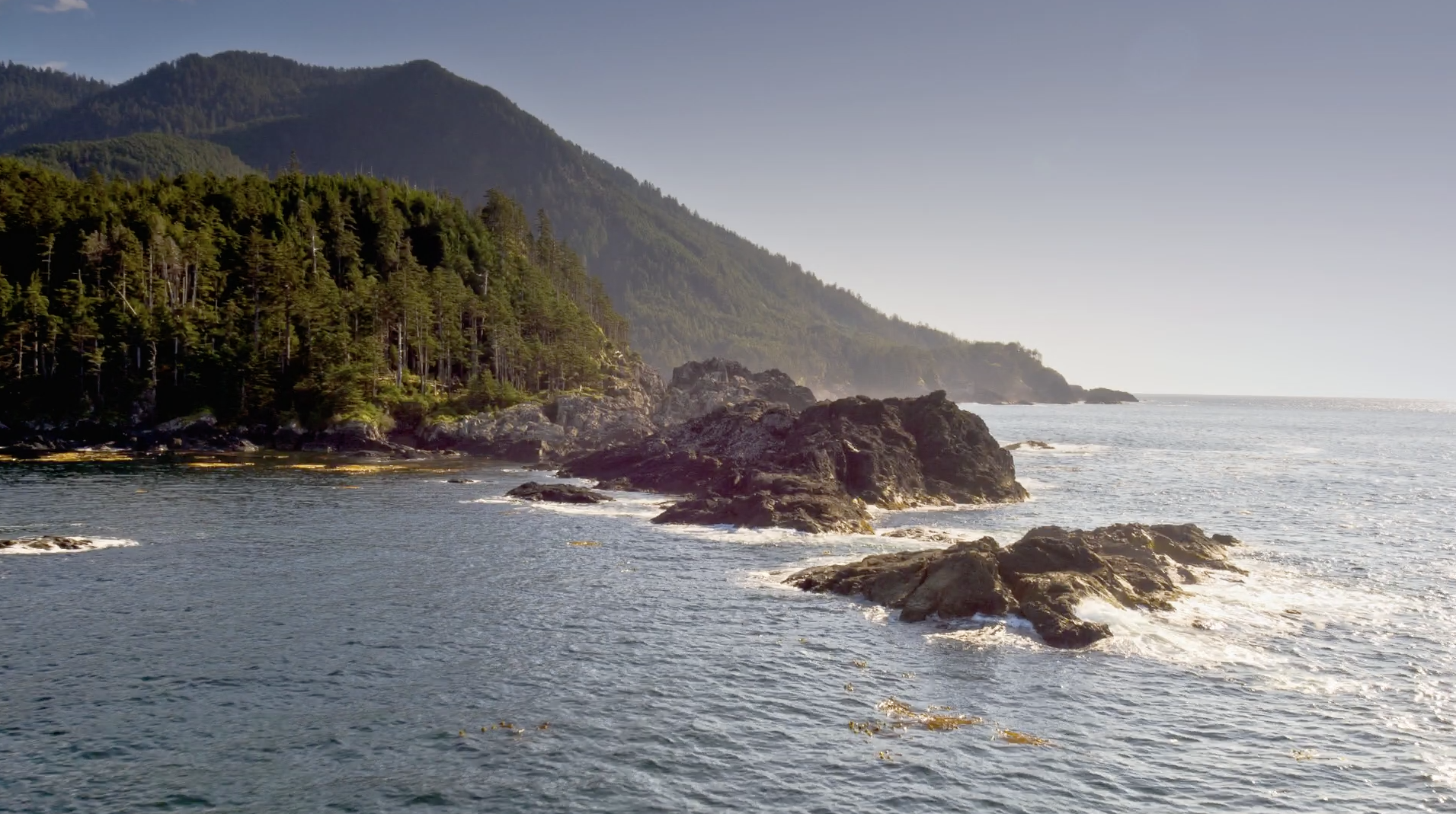
It is a clear and bright day in early April 2025. Our team of Kitasoo Xai’xais knowledge holders and scientists travels by boat into the southern portion of Gitdisdzu Lugyeks, commonly known as Kitasu Bay and a critical harvesting area for Kitasoo Xai’xais. Tska̱h/wán̓ái are still spawning, turning the water turquoise with milt and attracting a humpback whale and large numbers of sea lions and seabirds into the bay. At least 6,000 surf scoters, diving ducks that feed on herring eggs attached to seaweed on the seafloor, surround the boat.

Chief Mason is with us. Under his guidance, we haul onto the boat hemlock boughs that he and his team of harvesters had set underwater a few days before. The boughs have accumulated several layers of herring eggs. Chief Mason directs us to transplant them to a northern section of Gitdisdzu Lugyeks where spawn has not occurred for several years. In doing so, we are implementing one of the experimental approaches that Indigenous Peoples have developed to restore and augment species of cultural and ecological importance. That was the last time many in our team would spend time with Haay-maas “Charlie” Mason, who passed away on August 24, 2025.

Project Git qṃsistá reflects the good will, knowledge, and dedication of many people. But it is fair to say that without Charlie there would be no project. During that first meeting in Klemtu, in 2023, Charlie recounted how he had been advocating for his people since 1972, experiencing many negative interactions with government. Yet Charlie held no grudges. In closing that meeting, he had shared his vision for the type of work that we were engaging in: “…go coastwide, go worldwide. Because of climate change. Because everything is connected, and it is better to work together.”

At the meeting in Klemtu, Kitasoo Xai’xais Territory, November 2023. Image: Rebecca Schjins.

Want to Reach Us?

Please complete the contact form and we will get back to you as soon as we can!

Contact Us

Related Stories

Read the latest news and articles from CFN member communities.

Explore more stories:

Want to Reach Us?

Please complete the contact form and we will get back to you as soon as we can!

Contact Us